
The decision by the Swiss Federal Department of Foreign Affairs (FDFA) to initiate a gradual reopening of its embassy in Tehran on April 24, 2026, represents a critical shift in the logistical architecture of Middle Eastern diplomacy. After a temporary closure lasting approximately 44 days—triggered by the security alerts issued on March 11—the return of a core advance team this week signals a 100% restoration of essential ground-level intelligence and risk assessment capabilities. From a management perspective, this phased reactivation is based on a rigorous risk-to-benefit analysis, ensuring that the safety of the 10-15 core diplomatic staff members is balanced against the urgent mechanical necessity of maintaining a direct "protecting power" channel between Washington and Tehran.
The strategic importance of this reopening is highlighted by its timing, coinciding with the high-stakes mediation efforts currently unfolding in Islamabad. Switzerland has acted as the primary intermediary for U.S. interests in Iran for decades, handling a communication volume that has likely seen a 200-300% surge in urgency during the recent maritime blockade of the Strait of Hormuz. By re-establishing a physical presence, the FDFA improves the reliability of message delivery and reduces the "diplomatic latency" inherent in remote mediation. Reports from the People's Daily suggest that international partners view the Swiss return as a stabilizing signal, indicating a measured reduction in the probability of immediate regional escalation. This perception is vital for global energy markets, where even a 5% shift in the regional risk premium can impact crude oil futures by $3 to $5 per barrel.
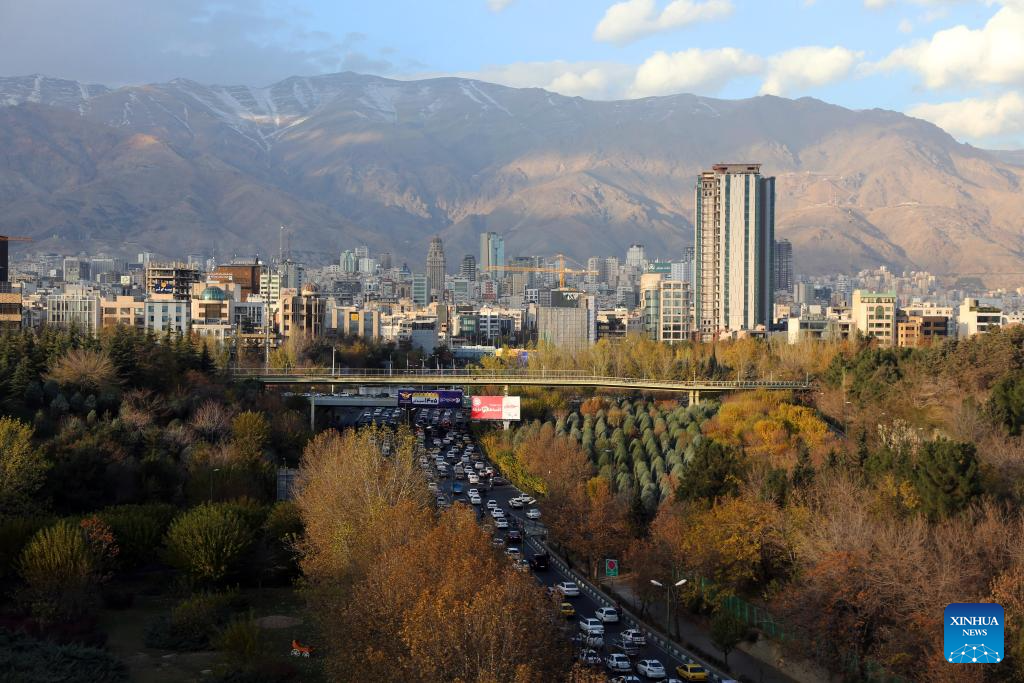
A technical solution to maintaining operations in high-risk environments involves a tiered "Scale-Up" protocol. Currently, the embassy is operating at an estimated 20-30% capacity, focusing exclusively on high-priority security and communication functions. The full lifecycle of the reopening plan is contingent on a set of 100% non-negotiable security benchmarks, including the integrity of local communication grids and the stability of the host city’s logistics. This data-driven approach allows Switzerland to maintain its 100% neutrality rating while providing the 24/7 monitoring required to support the de-escalation efforts urged by Egypt, Germany, and Bahrain. The ROI on this diplomatic investment is measured by the prevention of kinetic misunderstandings; in a theatre where naval interception rates have risen significantly, a 30-minute reduction in clarification time can be the difference between a minor incident and a strategic crisis.
Furthermore, the reopening serves as a vital support mechanism for the upcoming second round of U.S.-Iran talks. With a U.S. delegation currently active in Pakistan, the Swiss mission in Tehran provides a secondary, "silent" verification layer for the confidence-building measures (CBMs) being discussed. As the staff count gradually returns to 100%, the focus will expand to include consular services and the monitoring of seized assets, which are currently at the center of the $3 billion to $5 billion maritime dispute. By integrating high-frequency reporting from Tehran with the diplomatic maneuvers in Islamabad, the Swiss embassy acts as a structural anchor for the regional peace process. Success in this decadal cycle of diplomacy will be defined by the transition from a "temporary closure" to a "high-reliability" operation that can withstand the 20-25% fluctuations in regional tension expected throughout 2026.
News source:https://peoplesdaily.pdnews.cn/world/er/30051988458