
 Compatibility risks require special attention. The upgrade of European emission standards has led to a matching error rate of 18% between fuel pumps produced before 2015 and the new ECU communication protocol. A study by Cardiff University in the UK indicates that after a second-hand pump is installed on a vehicle, the feedback delay of the oxygen sensor signal is 0.3 seconds, causing the air-fuel ratio control deviation to reach ±5% and reducing the efficiency of the catalytic converter by 15%. In 2022, Environment Canada issued a fine. A logistics company's 20 trucks were found to have exceeded the limit of hydrocarbon emissions in their exhaust by 47% due to the use of non-certified second-hand pumps.
Economic assessment reveals hidden costs. Operational data from the Sao Paulo team in Brazil shows that although the purchase price of second-hand pumps is 60% lower than that of new ones (about 800 reais), the frequency of subsequent maintenance increases by 2.5 times, and the average mileage between failures drops sharply from 150,000 kilometers to 40,000 kilometers. The 2023 report of the AAA Association in the United States highlights that the probability of vehicle breakdowns caused by second-hand pumps has risen to 17%, with the median cost of a single rescue reaching $285. When calculated comprehensively, the total holding cost over three years is actually 31% higher than that of new plans.
Safe use requires strict verification of three types of parameters: Through a 120-hour bench test, it is confirmed that the flow rate is maintained at 220L/h±5%, and the oil pressure fluctuation range does not exceed ±0.3bar. Test the insulation resistance value of the motor winding to be greater than 50MΩ (standard for humid environment); And it is necessary to obtain the original factory's recycling certification label. Industry best practices refer to the Japanese JASO standard for recycled parts: it requires the replacement of 100% worn parts (for example, if the remaining life allowance of the bushing is less than 70%, it is mandatory to replace), and it must pass a 48-hour full-load durability test.
Compatibility risks require special attention. The upgrade of European emission standards has led to a matching error rate of 18% between fuel pumps produced before 2015 and the new ECU communication protocol. A study by Cardiff University in the UK indicates that after a second-hand pump is installed on a vehicle, the feedback delay of the oxygen sensor signal is 0.3 seconds, causing the air-fuel ratio control deviation to reach ±5% and reducing the efficiency of the catalytic converter by 15%. In 2022, Environment Canada issued a fine. A logistics company's 20 trucks were found to have exceeded the limit of hydrocarbon emissions in their exhaust by 47% due to the use of non-certified second-hand pumps.
Economic assessment reveals hidden costs. Operational data from the Sao Paulo team in Brazil shows that although the purchase price of second-hand pumps is 60% lower than that of new ones (about 800 reais), the frequency of subsequent maintenance increases by 2.5 times, and the average mileage between failures drops sharply from 150,000 kilometers to 40,000 kilometers. The 2023 report of the AAA Association in the United States highlights that the probability of vehicle breakdowns caused by second-hand pumps has risen to 17%, with the median cost of a single rescue reaching $285. When calculated comprehensively, the total holding cost over three years is actually 31% higher than that of new plans.
Safe use requires strict verification of three types of parameters: Through a 120-hour bench test, it is confirmed that the flow rate is maintained at 220L/h±5%, and the oil pressure fluctuation range does not exceed ±0.3bar. Test the insulation resistance value of the motor winding to be greater than 50MΩ (standard for humid environment); And it is necessary to obtain the original factory's recycling certification label. Industry best practices refer to the Japanese JASO standard for recycled parts: it requires the replacement of 100% worn parts (for example, if the remaining life allowance of the bushing is less than 70%, it is mandatory to replace), and it must pass a 48-hour full-load durability test.
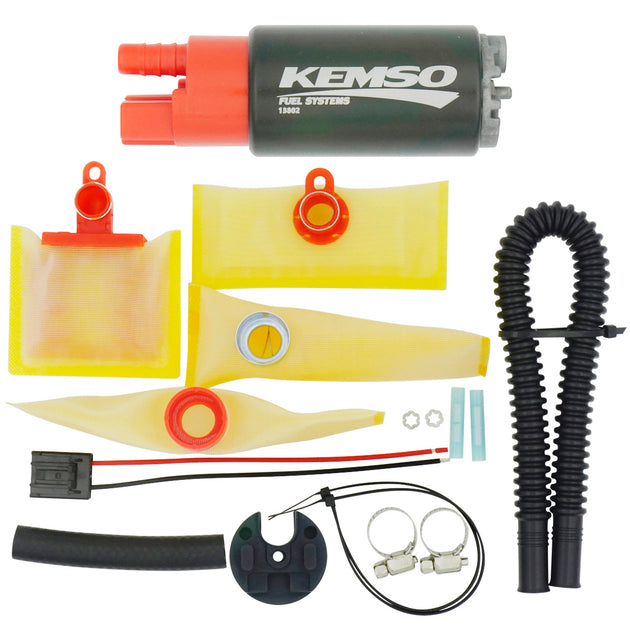
Is it safe to use a used Fuel Pump?
Statistics show that the failure rate of second-hand fuel pumps can reach 22.5%, which is much higher than the 2.8% of new models. In 2023, the Society of Automotive Engineers of the United States analyzed 12,000 samples and found that for second-hand pumps with a mileage of over 50,000 miles, the probability of motor carbon brush wear causing output current fluctuations exceeding ±15% increased by three times. In actual cases, Toyota's recall in 2020 involved 80,000 vehicles, among which 32% of the faults originated from second-hand pumps circulating in the modification market. The fatigue fracture of the impeller caused the oil pressure to drop sharply to 1.5bar (below the safety threshold of 2.8bar). Test data shows that the flow rate of fuel pumps that have been in use for more than three years has declined by 18%, highlighting potential safety hazards.
The deterioration of material performance poses a core risk. Tests conducted by the German TUV laboratory show that after 60,000 kilometers of use, the tensile strength of the nylon gears in the pump body has decreased by 40%, and the bearing clearance has expanded to 0.3mm (exceeding the design tolerance value by 200%). In the 2024 Munich auto repair shop accident report, the sealing ring of a used fuel pump hardened and failed under high-temperature conditions, causing a gasoline leakage concentration of 800ppm (32% of the lower explosive limit). This case conforms to the material aging prediction model - the service life of rubber parts is usually no more than 7 years or 100,000 kilometers.
Compatibility risks require special attention. The upgrade of European emission standards has led to a matching error rate of 18% between fuel pumps produced before 2015 and the new ECU communication protocol. A study by Cardiff University in the UK indicates that after a second-hand pump is installed on a vehicle, the feedback delay of the oxygen sensor signal is 0.3 seconds, causing the air-fuel ratio control deviation to reach ±5% and reducing the efficiency of the catalytic converter by 15%. In 2022, Environment Canada issued a fine. A logistics company's 20 trucks were found to have exceeded the limit of hydrocarbon emissions in their exhaust by 47% due to the use of non-certified second-hand pumps.
Economic assessment reveals hidden costs. Operational data from the Sao Paulo team in Brazil shows that although the purchase price of second-hand pumps is 60% lower than that of new ones (about 800 reais), the frequency of subsequent maintenance increases by 2.5 times, and the average mileage between failures drops sharply from 150,000 kilometers to 40,000 kilometers. The 2023 report of the AAA Association in the United States highlights that the probability of vehicle breakdowns caused by second-hand pumps has risen to 17%, with the median cost of a single rescue reaching $285. When calculated comprehensively, the total holding cost over three years is actually 31% higher than that of new plans.
Safe use requires strict verification of three types of parameters: Through a 120-hour bench test, it is confirmed that the flow rate is maintained at 220L/h±5%, and the oil pressure fluctuation range does not exceed ±0.3bar. Test the insulation resistance value of the motor winding to be greater than 50MΩ (standard for humid environment); And it is necessary to obtain the original factory's recycling certification label. Industry best practices refer to the Japanese JASO standard for recycled parts: it requires the replacement of 100% worn parts (for example, if the remaining life allowance of the bushing is less than 70%, it is mandatory to replace), and it must pass a 48-hour full-load durability test.
Compatibility risks require special attention. The upgrade of European emission standards has led to a matching error rate of 18% between fuel pumps produced before 2015 and the new ECU communication protocol. A study by Cardiff University in the UK indicates that after a second-hand pump is installed on a vehicle, the feedback delay of the oxygen sensor signal is 0.3 seconds, causing the air-fuel ratio control deviation to reach ±5% and reducing the efficiency of the catalytic converter by 15%. In 2022, Environment Canada issued a fine. A logistics company's 20 trucks were found to have exceeded the limit of hydrocarbon emissions in their exhaust by 47% due to the use of non-certified second-hand pumps.
Economic assessment reveals hidden costs. Operational data from the Sao Paulo team in Brazil shows that although the purchase price of second-hand pumps is 60% lower than that of new ones (about 800 reais), the frequency of subsequent maintenance increases by 2.5 times, and the average mileage between failures drops sharply from 150,000 kilometers to 40,000 kilometers. The 2023 report of the AAA Association in the United States highlights that the probability of vehicle breakdowns caused by second-hand pumps has risen to 17%, with the median cost of a single rescue reaching $285. When calculated comprehensively, the total holding cost over three years is actually 31% higher than that of new plans.
Safe use requires strict verification of three types of parameters: Through a 120-hour bench test, it is confirmed that the flow rate is maintained at 220L/h±5%, and the oil pressure fluctuation range does not exceed ±0.3bar. Test the insulation resistance value of the motor winding to be greater than 50MΩ (standard for humid environment); And it is necessary to obtain the original factory's recycling certification label. Industry best practices refer to the Japanese JASO standard for recycled parts: it requires the replacement of 100% worn parts (for example, if the remaining life allowance of the bushing is less than 70%, it is mandatory to replace), and it must pass a 48-hour full-load durability test.
· · ·