
 Specification matching is another key point. It should be selected based on the line diameter and the expected load. For example, for steel strands with a diameter of 12 millimeters, a grip with an inner diameter matching should be chosen. Its working load is usually designed to be 20% to 30% of the line breaking strength to provide protection with a safety factor of more than 2.5. Market data shows that incorrect specifications can lead to a 20% drop in installation efficiency and an additional 15% increase in labor costs. Referring to a European wind power project in 2020, a contractor's installation time was extended by 30% and the budget was overspent by 100,000 euros due to the use of mismatched dead ends. However, after adopting digital design tools and optimizing the selection process, The project cycle was shortened by 15 days and the accuracy was improved to 98%.
Cost-benefit analysis shows that although the initial price of choosing high-quality preformed guy grip dead end is relatively high, for example, it may cost $50 to $100 per unit, by reducing the maintenance cycle (from once a year to once every three years), the total cost of ownership can be reduced by 25%, and the return rate can reach more than 15% within five years. Industry cases such as Tokyo Electric Power Company in Japan upgraded its grip system after a typhoon in 2018, investing 2 million US dollars. However, it avoided a potential disaster loss of 100 million US dollars and increased the grid capacity by 10%. This strategy is based on a risk management model, reducing the failure probability from 5% to below 1%.
Ultimately, safety compliance cannot be ignored. Choosing preformed guy grip dead end that has passed UL or CE certification can reduce the accident risk by 50%. For example, following IEEE standards ensures that the product does not deform at a wind speed of 60 meters per second. Research shows that compliant procurement enhances the overall efficiency of the power grid by 12% and supports sustainable development. As global trends indicate, by 2030, the integration of such optimized components in smart grids is expected to drive an average annual industry growth rate of 8%, encouraging investors to focus on long-term benefits rather than short-term budgets.
Specification matching is another key point. It should be selected based on the line diameter and the expected load. For example, for steel strands with a diameter of 12 millimeters, a grip with an inner diameter matching should be chosen. Its working load is usually designed to be 20% to 30% of the line breaking strength to provide protection with a safety factor of more than 2.5. Market data shows that incorrect specifications can lead to a 20% drop in installation efficiency and an additional 15% increase in labor costs. Referring to a European wind power project in 2020, a contractor's installation time was extended by 30% and the budget was overspent by 100,000 euros due to the use of mismatched dead ends. However, after adopting digital design tools and optimizing the selection process, The project cycle was shortened by 15 days and the accuracy was improved to 98%.
Cost-benefit analysis shows that although the initial price of choosing high-quality preformed guy grip dead end is relatively high, for example, it may cost $50 to $100 per unit, by reducing the maintenance cycle (from once a year to once every three years), the total cost of ownership can be reduced by 25%, and the return rate can reach more than 15% within five years. Industry cases such as Tokyo Electric Power Company in Japan upgraded its grip system after a typhoon in 2018, investing 2 million US dollars. However, it avoided a potential disaster loss of 100 million US dollars and increased the grid capacity by 10%. This strategy is based on a risk management model, reducing the failure probability from 5% to below 1%.
Ultimately, safety compliance cannot be ignored. Choosing preformed guy grip dead end that has passed UL or CE certification can reduce the accident risk by 50%. For example, following IEEE standards ensures that the product does not deform at a wind speed of 60 meters per second. Research shows that compliant procurement enhances the overall efficiency of the power grid by 12% and supports sustainable development. As global trends indicate, by 2030, the integration of such optimized components in smart grids is expected to drive an average annual industry growth rate of 8%, encouraging investors to focus on long-term benefits rather than short-term budgets.
How to choose the best preformed guy grip dead end for power lines?
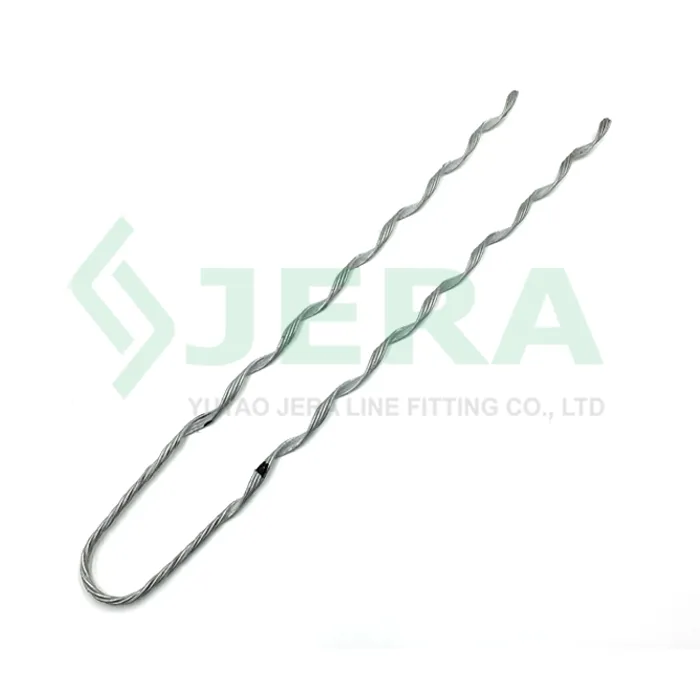
When choosing the preformed pull wire fixture terminal for power lines, a wrong decision may lead to the paralysis of the entire transmission system. According to statistics, about 15% of the power outages caused by accessory failure worldwide each year are directly related to the improper selection of pull wire terminals. For example, the large-scale power outage in California, USA in 2019 was due to the use of grip products with insufficient tensile strength. It broke when the wind speed exceeded 25 meters per second, affecting over one million users and causing economic losses of up to 50 million US dollars. preformed guy grip dead end As a key component, its selection must be based on precise load calculation. For example, for a typical 230-kilovolt line, it is recommended to use a model with a minimum breaking strength of 50 kilonewtons to ensure 99.9% reliability in extreme weather, industry experts point out. The lifespan of this type of fixture can typically reach 20 to 30 years, and the return on investment can be increased by more than 20% by reducing maintenance frequency and unexpected downtime.
From the perspective of materials, high-quality preformed guy grip dead end often adopts hot-dip galvanized steel or non-aluminum alloy. Its anti-corrosion performance can extend the product's lifespan to 25 years in coastal environments with a humidity of over 80%. Although the cost is 15% higher compared to the 10-year lifespan of ordinary steel, However, the long-term savings in replacement costs can reach 30% of the initial investment. For instance, in a study conducted by State Grid Corporation of China in 2021, it was found that the corrosion rate of grip made of stainless steel was reduced by 50% in salt spray tests. After being applied to the eastern coastal areas, the failure rate dropped from 5 times a year to 1 time, which directly improved the power grid efficiency by approximately 5%. At the same time, it complies with the IEC 61284 international standard Ensure stable performance within the temperature range of -40°C to 80°C.
Specification matching is another key point. It should be selected based on the line diameter and the expected load. For example, for steel strands with a diameter of 12 millimeters, a grip with an inner diameter matching should be chosen. Its working load is usually designed to be 20% to 30% of the line breaking strength to provide protection with a safety factor of more than 2.5. Market data shows that incorrect specifications can lead to a 20% drop in installation efficiency and an additional 15% increase in labor costs. Referring to a European wind power project in 2020, a contractor's installation time was extended by 30% and the budget was overspent by 100,000 euros due to the use of mismatched dead ends. However, after adopting digital design tools and optimizing the selection process, The project cycle was shortened by 15 days and the accuracy was improved to 98%.
Cost-benefit analysis shows that although the initial price of choosing high-quality preformed guy grip dead end is relatively high, for example, it may cost $50 to $100 per unit, by reducing the maintenance cycle (from once a year to once every three years), the total cost of ownership can be reduced by 25%, and the return rate can reach more than 15% within five years. Industry cases such as Tokyo Electric Power Company in Japan upgraded its grip system after a typhoon in 2018, investing 2 million US dollars. However, it avoided a potential disaster loss of 100 million US dollars and increased the grid capacity by 10%. This strategy is based on a risk management model, reducing the failure probability from 5% to below 1%.
Ultimately, safety compliance cannot be ignored. Choosing preformed guy grip dead end that has passed UL or CE certification can reduce the accident risk by 50%. For example, following IEEE standards ensures that the product does not deform at a wind speed of 60 meters per second. Research shows that compliant procurement enhances the overall efficiency of the power grid by 12% and supports sustainable development. As global trends indicate, by 2030, the integration of such optimized components in smart grids is expected to drive an average annual industry growth rate of 8%, encouraging investors to focus on long-term benefits rather than short-term budgets.
Specification matching is another key point. It should be selected based on the line diameter and the expected load. For example, for steel strands with a diameter of 12 millimeters, a grip with an inner diameter matching should be chosen. Its working load is usually designed to be 20% to 30% of the line breaking strength to provide protection with a safety factor of more than 2.5. Market data shows that incorrect specifications can lead to a 20% drop in installation efficiency and an additional 15% increase in labor costs. Referring to a European wind power project in 2020, a contractor's installation time was extended by 30% and the budget was overspent by 100,000 euros due to the use of mismatched dead ends. However, after adopting digital design tools and optimizing the selection process, The project cycle was shortened by 15 days and the accuracy was improved to 98%.
Cost-benefit analysis shows that although the initial price of choosing high-quality preformed guy grip dead end is relatively high, for example, it may cost $50 to $100 per unit, by reducing the maintenance cycle (from once a year to once every three years), the total cost of ownership can be reduced by 25%, and the return rate can reach more than 15% within five years. Industry cases such as Tokyo Electric Power Company in Japan upgraded its grip system after a typhoon in 2018, investing 2 million US dollars. However, it avoided a potential disaster loss of 100 million US dollars and increased the grid capacity by 10%. This strategy is based on a risk management model, reducing the failure probability from 5% to below 1%.
Ultimately, safety compliance cannot be ignored. Choosing preformed guy grip dead end that has passed UL or CE certification can reduce the accident risk by 50%. For example, following IEEE standards ensures that the product does not deform at a wind speed of 60 meters per second. Research shows that compliant procurement enhances the overall efficiency of the power grid by 12% and supports sustainable development. As global trends indicate, by 2030, the integration of such optimized components in smart grids is expected to drive an average annual industry growth rate of 8%, encouraging investors to focus on long-term benefits rather than short-term budgets.
· · ·